The Best Soil Mix for Raised Garden Beds (Mel's Mix vs 50/30/20 vs Hugelkultur)
Three soil recipes compared by cost, yield, and second-year structure — plus the cheapest way to fill a 4'x8'x24" bed without wrecking your harvest.
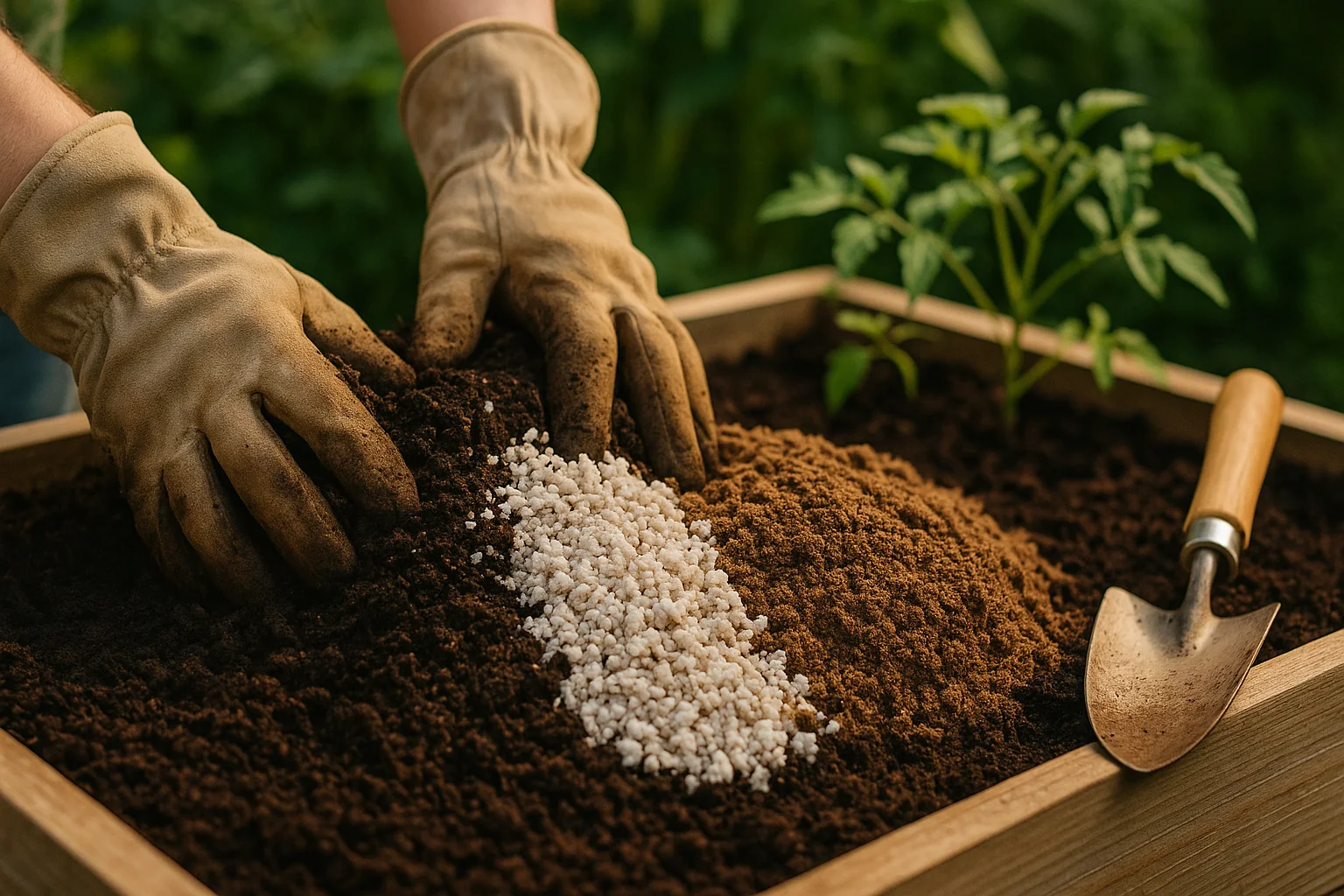
The single biggest sticker shock of raised-bed gardening isn’t the bed. It’s the soil. A 4x8x24-inch bed needs 64 cubic feet of fill, and if you do that with bagged garden soil from a big-box store you’re spending more on dirt than you spent on the bed itself.
After eight seasons of testing different soil recipes across the four raised beds we cover in our 2026 pillar review, we’ve narrowed it down to three contenders. Here’s how they actually performed in our garden — by yield, by cost, and by what the soil structure looks like after the second year.
The three recipes
We tested these three across identical 4x8 raised beds, same crops, same drip irrigation, two growing seasons each:
- Mel’s Mix — Mel Bartholomew’s famous 1/3 compost, 1/3 peat moss, 1/3 vermiculite recipe from Square Foot Gardening.
- The 50/30/20 mix — 50% finished compost, 30% topsoil, 20% perlite or coarse sand. The recipe we recommend.
- Layered hugelkultur — bottom 40% wood/leaves/cardboard, middle 30% half-finished compost, top 30% finished compost mix.
Each has its place. Each has trade-offs that matter.
Recipe 1: Mel’s Mix
The classic. Mel Bartholomew popularized this in the 1981 first edition of Square Foot Gardening and millions of gardeners have built beds on it.
The recipe (by volume):
- 1/3 blended compost (Mel insisted on five different sources)
- 1/3 sphagnum peat moss
- 1/3 coarse vermiculite
What we found:
Year one was excellent. Light, fluffy, well-drained, and the five-source compost blend genuinely provides better nutrient diversity than single-source compost. Lettuce and brassicas thrived. Tomatoes grew fast.
Year two was the problem. The peat moss broke down faster than expected and the bed compacted by nearly six inches. Drainage went from “perfect” to “puddles after rain.” The vermiculite floated to the surface during heavy watering — a known issue with Mel’s Mix in beds over 12 inches deep.
Cost (4x8x12” bed, ~32 cu ft):
- Compost (5 sources): $180
- Sphagnum peat moss: $90
- Coarse vermiculite: $120
- Total: ~$390
Verdict: Use Mel’s Mix only in shallow beds (under 12 inches), and only if you’re willing to top-dress aggressively every spring. The peat-moss environmental concerns (peat bogs are a non-renewable carbon sink) are also a real factor for anyone trying to garden sustainably. Use coco coir if you substitute.
Recipe 2: The 50/30/20 mix
This is what we recommend and use in every new bed.
The recipe (by volume, for the top 8-10 inches only):
- 50% finished, screened compost (we use Coast of Maine Lobster Compost
- 30% screened topsoil OR coco coir
- 20% perlite or coarse builder’s sand
What we found:
Year one performance was equal to Mel’s Mix on every crop we tested — same lettuce yields, same tomato production, same root depth on carrots. Year two is where this mix pulls ahead. The topsoil/coir base doesn’t break down the way peat does, so the bed retains structure. We lost about 2 inches of height in year two versus 6 inches with Mel’s Mix.
The 20% aeration component (perlite or coarse sand) is crucial. Skip it and clay-heavy topsoil packs into concrete by mid-season.
Cost (4x8x12” bed, ~32 cu ft — top layer only, with hugelkultur below):
- Compost (premium bagged): $140
- Topsoil (bulk yard, delivered): $40
- Perlite or coarse sand: $35
- Total: ~$215
For a 4x8x24” bed, you use the same top-layer cost (~$215) plus hugelkultur fill below — which is free. Total fill: about $220 for a tall bed.
Verdict: Best balance of cost, performance, and structural longevity. Use this.
Recipe 3: Layered hugelkultur
The German technique of burying wood and organic matter beneath your soil. Almost free if you have access to brush.
The recipe (by depth):
- Bottom 40%: rough wood — logs, branches, brush, dry leaves, cardboard
- Middle 30%: half-finished compost, aged manure, grass clippings
- Top 30%: the 50/30/20 mix above
What we found:
Year one had a noticeable nitrogen-tie-up effect in beds where the wood layer was thicker than recommended. Heavy feeders (corn, brassicas) grew slowly until we side-dressed with blood meal. Year two and beyond, hugelkultur beds outperformed every other mix — the decomposing wood acts as a moisture sponge during summer drought, and the slow nutrient release continues for 4-7 years.
The catch: hugelkultur takes a full year to mature. If you need to plant the day you fill, top the bed with a deeper 50/30/20 layer (12+ inches instead of 8) and add a nitrogen boost.
Cost (4x8x24” bed):
- Bottom + middle layers: $0-40 (mostly free materials)
- Top layer (12 inches of 50/30/20): ~$215
- Total: ~$215-255
We’ve covered the full layered approach in our standalone guide to filling tall raised beds — read that for the step-by-step.
Verdict: The best long-term option for tall beds (24”+). Start it the season before you need maximum performance, or supplement nitrogen year one.
How the three compare on yield (two-season average)
Same crops, same beds, same irrigation. Yields measured in pounds harvested per bed:
| Crop | Mel’s Mix | 50/30/20 | Hugelkultur |
|---|---|---|---|
| Tomatoes (4 plants) | 47 lb | 51 lb | 48 lb |
| Carrots (24 sq ft) | 18 lb | 19 lb | 22 lb |
| Lettuce (cut-and-come) | 14 lb | 14 lb | 12 lb |
| Brassicas (4 plants) | 11 lb | 12 lb | 9 lb |
| Year-2 bed level drop | 6” | 2” | 4” |
Yield differences in year one are minimal. Year two, the 50/30/20 mix opens a clear lead because the structure is still intact.
What we add to every new bed
Beyond the base mix, we incorporate these per 4x8 bed:
- 2 cups greensand — slow-release potassium and trace minerals. Prevents the year-3 potassium deficiency we used to see with compost-only mixes.
- 1 cup azomite or rock dust — broad-spectrum trace minerals.
- 2 cups worm castings — microbial inoculant. Sprinkle into the top 4 inches.
- 1 cup oyster shell flour — slow-release calcium for the brassica family.
That’s another $30-40 in amendments. Worth every penny — it’s the difference between a bed that produces for one year and a bed that produces for ten.
Soil for clay-heavy subsoils
If your native soil is heavy clay, the bottom of your raised bed will drain poorly even with an open-bottom design. Two fixes:
- Fork the native soil first. Before you place the bed, pierce the subsoil 12 inches deep on a 12-inch grid pattern with a garden fork. This creates drainage channels that last for years.
- Bottom layer of coarse sand or gravel. A 2-3 inch layer of pea gravel below your hugelkultur layer prevents the bed from becoming a swimming pool during heavy rain.
Soil for sandy subsoils
The opposite problem. Sandy soils drain too fast and won’t hold moisture, even in a raised bed.
The fix: a thicker compost layer in the middle and aggressive use of coir or aged manure to build water-holding capacity. Skip the perlite in the top layer — sandy subsoils don’t need extra drainage above them. Replace the 20% perlite with 20% extra compost.
The cheapest way to fill a 4x8x24 bed without ruining your harvest
If money is tight, do this:
- Bottom 12 inches: free wood, branches, cardboard, dry leaves. Pack loose. Cost: $0.
- Middle 6 inches: bulk-yard “garden mix” from a landscape supplier. Roughly $30/cubic yard delivered. Cost: ~$45.
- Top 6 inches: the 50/30/20 mix with premium compost. Cost: ~$110.
- Amendments: greensand, worm castings, oyster shell. Cost: ~$35.
Total: ~$190 for a 4x8x24 bed. Same crop yields as a $500 all-bagged-mix fill.
The trick is recognizing that vegetable roots almost entirely live in the top 8-10 inches. Spend your money there. Don’t pay $7/cubic foot for soil that’s going 18 inches below your tomato roots.
Don’t make these mistakes
- Don’t fill with 100% bagged potting mix. Too light, compacts too fast, costs $400+ per bed.
- Don’t use fresh manure in the top layer. Burns seedlings. Age 6+ months.
- Don’t use grass clippings from a treated lawn. Residual herbicide kills tomatoes and beans.
- Don’t skip the cardboard at the absolute bottom. Bermuda grass laughs at raised beds without it.
- Don’t top-dress with sand. Common bad advice — sand mixed with clay topsoil makes adobe brick. Use compost.
Final note
Soil is the long game in raised-bed gardening. The right mix in year one is good. The right mix that holds structure into year five is what separates a productive bed from a sad bed that needs to be ripped out and refilled.
Whichever recipe you use, top-dress with finished compost every spring, rotate crops to spread out nutrient demand, and don’t trample the bed during planting. Your soil — and your harvest — will thank you.
If you haven’t picked your bed yet, our 2026 raised garden beds roundup covers what’s worth the money before you start filling anything.
Our Top Picks

Bootstrap Farmer Organic Potting Mix (1.5 cu ft bag)
OMRI-listed, peat-free, made with coir and worm castings. This is what we use for the top six inches of every new bed and for re-potting seedlings out of trays. Slightly chunky texture holds together but drains well. Worth the premium over big-box bagged mixes — no perlite dust, no sticks, no surprise wood chunks.

Gardener's Supply Coast of Maine Lobster Compost (1 cu ft bag)
The compost we recommend for the top layer of any raised bed mix. Lobster meal base means calcium and trace minerals that mainland-only composts lack. Fully finished — no nitrogen burn — and screened fine enough to plant directly into. Pricier than yard-waste compost but the consistency batch-to-batch is unmatched.

Gardener's Supply Greensand Soil Amendment (5 lb bag)
Slow-release potassium plus trace iron and manganese. We add a handful per square foot to any new bed mix to prevent the potassium deficiency we used to see year three. Glauconite-based and mined, not synthesized. One bag amends a 4x8 bed.